A tribute to the tool we can't live without and that has never once told us we did a good job.
1. We've Been Together Since My First PCB Layout, and It's Never Once Said Thank You
Every PCB designer has one relationship that has outlasted every job change, every tool migration, and every "I'm switching to a different EDA suite" phase: the Design Rule Check, better known as DRC. It's there from your first layout to your five-hundredth. It has seen every clearance you've ever cut too close. And in all that time, across all those boards, it has never once said "great job."
Not a "nice routing." Not a "clean stackup, well done." Not even a half-hearted "not bad." Just silence when things go right, and a very detailed, very unfeeling list when they don't. This is our tribute to that relationship — equal parts gratitude and grievance.
2. The Report That Scrolls Longer Than Your Career
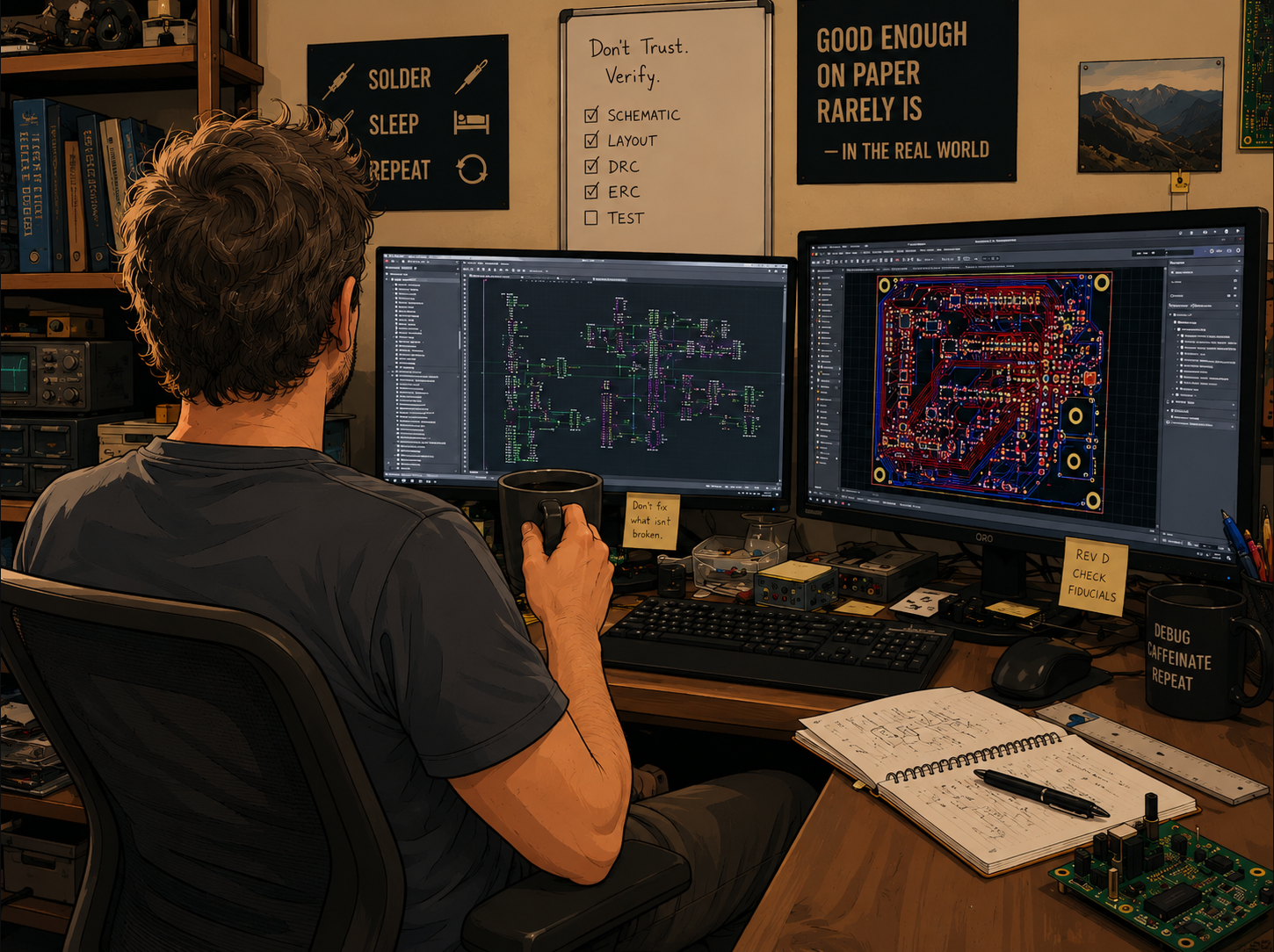
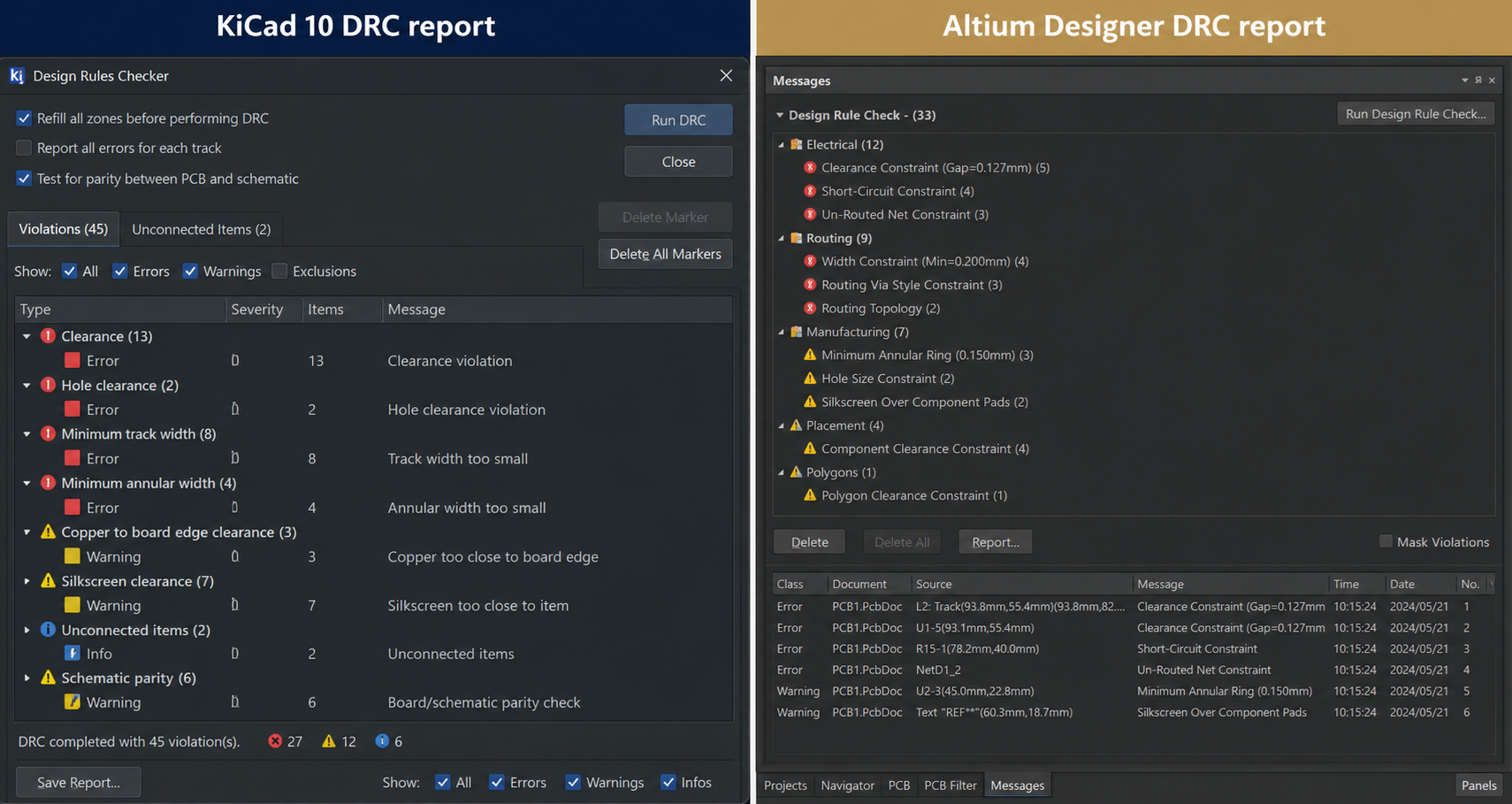
You know the moment. You've just finished routing what you're fairly sure is a beautiful board, you click "Run DRC," and then you wait — not because it takes long, but because some part of you needs a second to prepare. Then the report opens, and you're doing the universal PCB designer move: scrolling straight to the bottom just to see the violation count before you dare read a single line.
And here's the part that never stops being funny: it doesn't matter which tool you're in. The logo changes, the color scheme changes, the font changes — but the feeling of opening that panel is identical everywhere.
3. Fix One, Two More Appear: The DRC Hydra
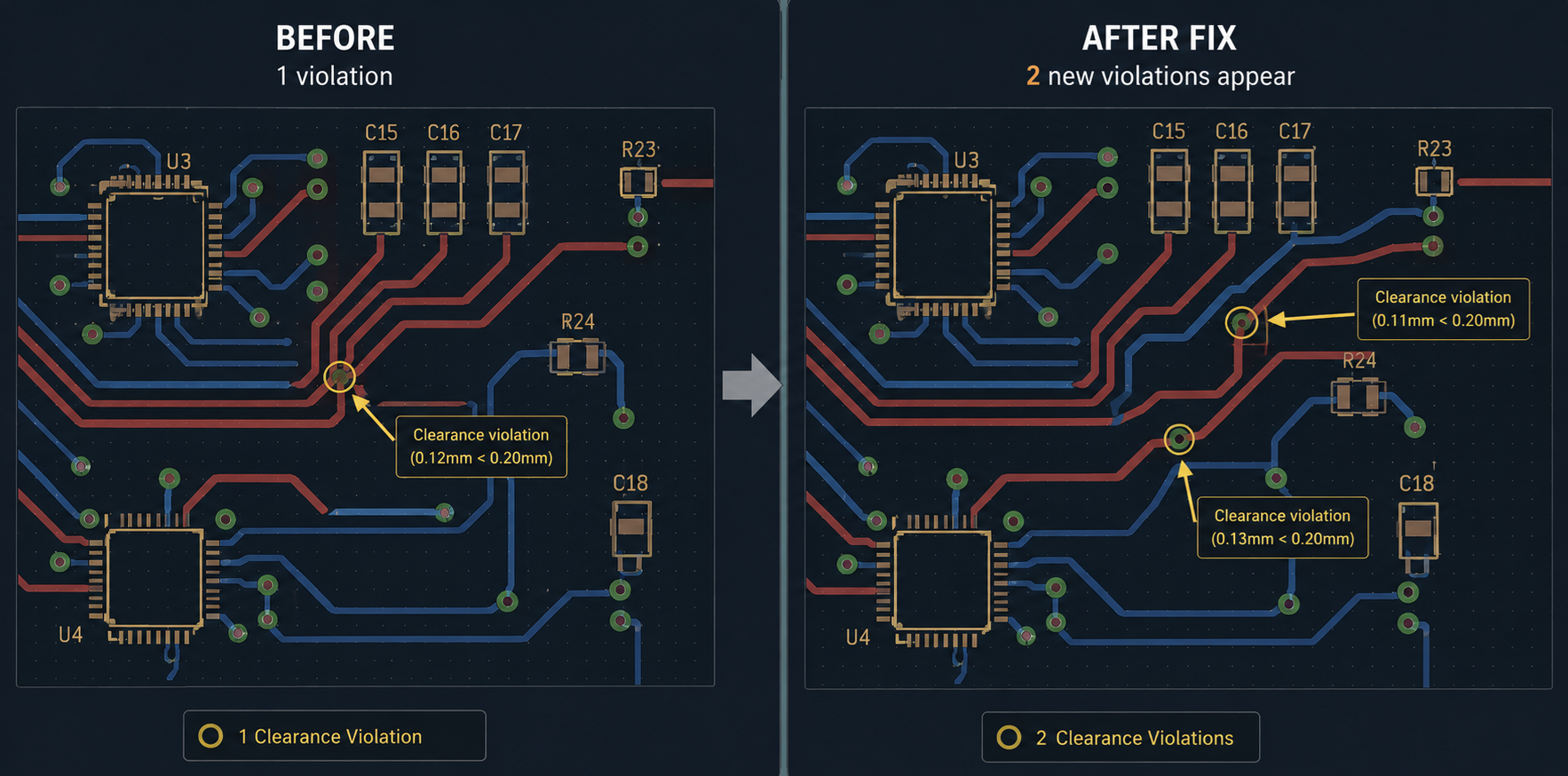
You nudge a trace to clear one violation, and somehow two more show up in its place — one from a component you swear you didn't touch. This is the part of the DRC relationship that feels less like debugging and more like negotiating. You give something, it takes something else. Move a via, lose a clearance somewhere. Widen a trace, lose your neck-down. Fix the differential pair, and suddenly the ground pour has opinions.
Nobody warns you about this part when you're learning PCB design. They tell you DRC catches your mistakes. Nobody tells you it sometimes seems to invent new ones just to keep the relationship interesting.
4. Can We Just Glance Over It This Once? No.
There is a specific fantasy every PCB designer has had late at night, deadline looming: what if we just... didn't run it this time? What if we skipped straight to Gerbers and let fate decide? It's a lovely thought for about four seconds. Then the part of your brain that has actually sent a board to fab with an unresolved violation wakes up and reminds you exactly why that plan never survives contact with reality.
So no, we can't glance over it. We know it, DRC knows it, and DRC absolutely knows we know it — which might be why it never bothers being polite about it.
5. The Effort-to-Acknowledgment Ratio Is Criminal
Add up the hours: the fixing, the re-running, the fixing again, the coffee consumed while staring at a report that refuses to get shorter. Now compare that to the acknowledgment you get when it's finally, finally clean. There isn't one. No confetti. No "well done." Not even a friendly green checkmark with a little personality to it — just an empty violations list and the cold comfort of silence.
6. Why We Keep Coming Back Anyway
Here's the thing about a relationship built entirely on criticism: it's still the relationship that keeps your boards out of the scrap pile. Every real clearance problem it catches is one that didn't get the chance to surprise you after fabrication. Every "hydra" moment, annoying as it is in the middle of a Thursday afternoon, is a problem found on your screen instead of on a returned board.
So we'll keep opening that report, keep scrolling to the bottom first, and keep fixing the list one stubborn item at a time. DRC still isn't going to say "great job." But at this point, a clean report is basically the closest thing to a standing ovation we're ever going to get — and honestly, we've learned to take it.