A set of decisions we hold ourselves to, board after board.
1. A Question, Not a Claim
"Quality" is an easy word to put on a product page and a hard one to actually mean. In PCB design, where a missed differential-pair reference or an unflagged routing artifact can turn into a re-spin, we'd rather not throw the word around loosely. So instead of telling you our tool is high quality, we want to walk through what quality actually means to us in practice.
For us, it starts with placement that actually holds up — something an engineer can look at and refine, not tear apart and redo from scratch. It continues into routing: fitting the board within its real constraints, keeping the stackup no more complex than it needs to be, and doing it in a way that's still economical to build and reasonable to manufacture. None of that matters, though, if the board hasn't actually been looked at closely. So quality also means going deep enough into the design to catch what a careful engineer would catch — and being upfront about what was checked and what held up, rather than just handing back a board with components on it and calling it done.
Everything below is really this one idea, applied in different places: reduce the uncertainty an engineer has to carry, don't just automate around it.
2. Quality Means the Engineer Stays in Control
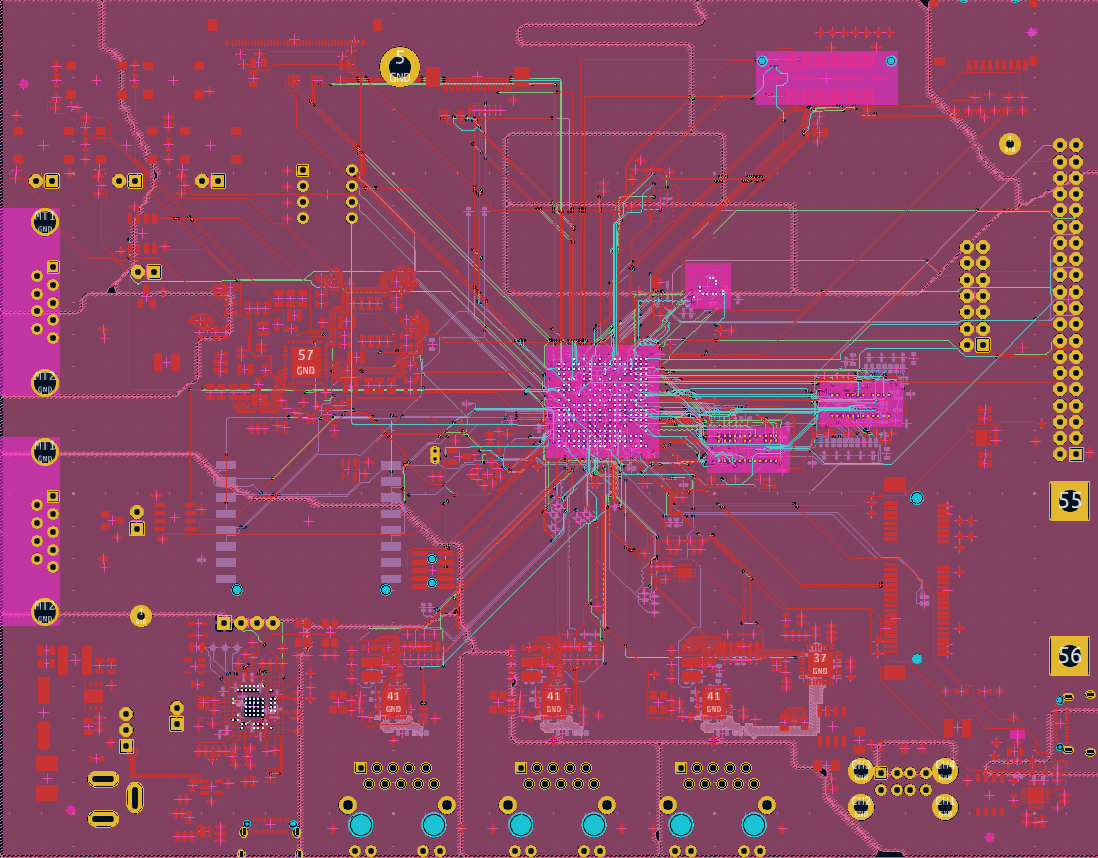
Automation that moves components or reroutes traces without asking is fast, but speed alone isn't quality. For us, quality means the engineer can see and act on what's happening at each stage of the process, not just the final result.
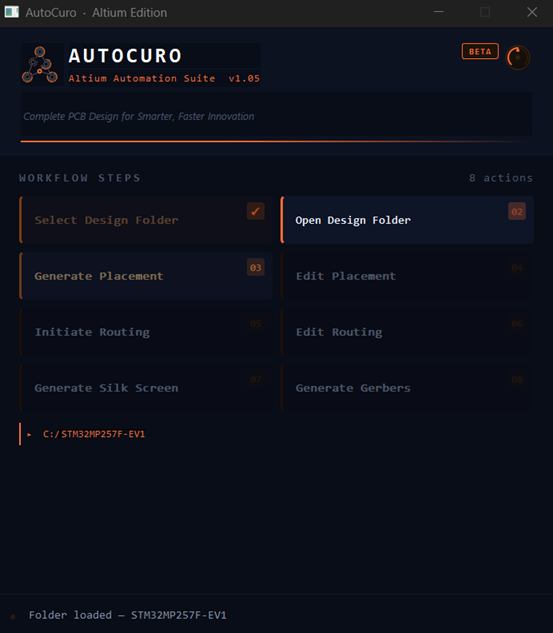
That's why the workflow is broken into distinct stages — placement, layout, and silkscreen — rather than one pass from schematic to finished board. At each stage, the tool produces a review report the engineer looks at before the next stage runs. This isn't a passive review, either: the engineer can go into the stage's output directly and adjust it — moving a placement, tweaking a route, editing what the stage produced — before it feeds into the next one. It's stage-by-stage review with room to actually change things, not a single black box at the end.
- Placement, layout, and silkscreen are handled as separate stages, not one pass
- Each stage produces a review report before moving to the next
- Engineer input at each checkpoint shapes what the next stage does
3. Quality Means Showing Our Reasoning
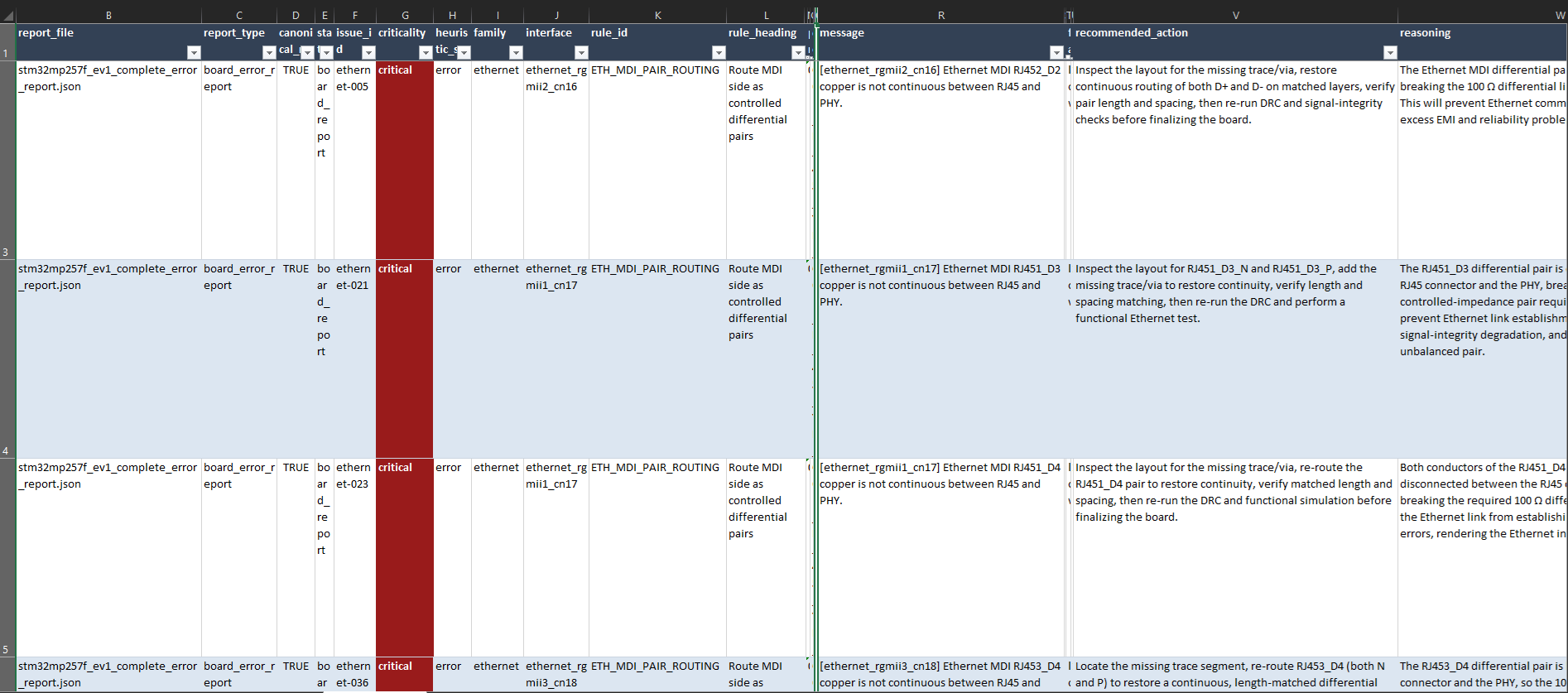
A tool that flags an issue without explaining it is asking for blind trust, and that's not something we expect from engineers reviewing their own board. For every check, we try to show the rule that fired, the threshold behind it, and why it matters in plain PCB terms — not just a red marker with no context.
Here's what that looks like in practice. Say a differential pair crosses a void in its reference plane during routing — the pair itself is fully connected, so it won't fail a standard clearance or connectivity check. Our post-route review identifies the specific segment where the pair crosses the void, states the rule involved (a differential pair needs a continuous reference plane beneath it), and explains why it matters — the return path under that section can be impaired, which can shift the pair's effective impedance. The engineer sees this in the review report — the pair was routed this way, and here's the issue it creates. Where our automation hasn't solved something outright, our focus is at least to surface it clearly, so the engineer has what they need to fix it themselves.
We've written in more detail about this category of check and others we run after routing is complete in PCB Design Errors Your DRC Tool Won't Catch.
4. Quality Means Saying What We Can't Do Yet
This is the part most product pages skip, and we think it's the part that matters most. AutoCuro doesn't replace signal-integrity simulation, and it doesn't remove the need for manual refinement after placement and routing. Judgment calls on placement, routing, power planes, stackup, and SI/PI margins still belong to the engineer, not the tool. AutoCuro is intended to reduce repetitive design work and provide a stronger starting point for engineering review—not eliminate that review.
That's also why our case studies don't just show the result — they list what didn't work as well as what did, so it's clear a one-shot solution doesn't exist. If anything, we try to be our own harshest critic before anyone else has to be.

5. Quality Means Your Design Data Stays Yours
Quality isn't only about what happens on the board — it's also about what happens to the files behind it. AutoCuro runs desktop-first: your schematic and layout files stay on your machine rather than being uploaded to a server. For hardware teams working on proprietary designs, we think that's not a side feature — it's part of what a quality tool owes its users. You own your data, and your design stays private.
6. Quality Is a Moving Target
We're still early. Our rule packs get tighter as we work with more boards and more engineers — each new design surfaces something we hadn't accounted for, and that's part of how this improves. "Quality for us" right now means being honest about that stage, not skipping past it. It means listening when an engineer tells us something's missing, and treating every rule we ship as something to be checked and questioned, not something to defend just because we built it.
For us, quality means producing work an engineer can understand, inspect, and improve. It means keeping engineers involved, explaining what the tool found, protecting their design data, and being clear about what still requires human judgment.